
How to Start a Compost Pile
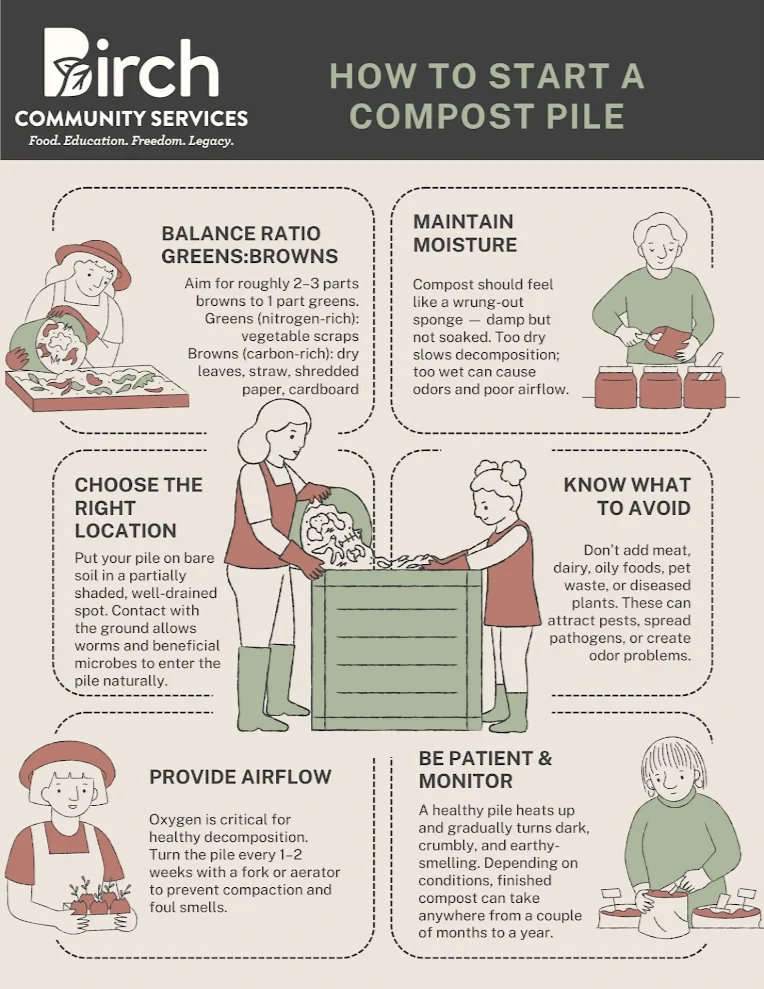
Starting a compost pile can feel a little intimidating at first, but it’s actually much simpler than it sounds. Composting is a great way to reduce waste, give nutrients back to the soil, and make use of things that would normally get thrown away — like vegetable scraps, leaves, and cardboard.
Whether you have a large backyard garden or just a small outdoor space, composting is an easy habit that can make a big difference over time!
Start with the Right Balance
A healthy compost pile needs a mix of “greens” and “browns.”
Browns are carbon-rich materials like dry leaves, straw, shredded paper, or cardboard. Greens are nitrogen-rich materials like fruit and vegetable scraps, coffee grounds, or fresh grass clippings.
A good rule of thumb is to use about 2–3 parts browns to 1 part greens. This helps everything break down properly and keeps the pile from getting too smelly or soggy.
Keep It Moist, But Not Too Wet
Your compost pile should feel similar to a wrung-out sponge. You want it damp, but not soaking wet.
If the pile gets too dry, it can slow the composting process down. If it gets too wet, it may start to smell or become compacted. Adding dry leaves or cardboard can help absorb extra moisture when needed.
Pick a Good Spot
Choose a location that has:
Bare soil underneath
Partial shade
Good drainage
Having the pile directly on the ground allows worms and helpful microbes to naturally join the process and support decomposition.
Know What to Leave Out
Not everything belongs in a compost pile. Some items can attract pests or create odor problems.
Avoid adding:
Meat or bones
Dairy products
Oily foods
Pet waste
Diseased plants
Don’t Forget Airflow
Compost needs oxygen to break down properly. Turning the pile every week or two helps keep air moving through it and speeds up decomposition.
You can use a shovel, pitchfork, or compost aerator to mix things around. This also helps prevent strong odors.
Be Patient with the Process
Composting takes time, and every pile is a little different. Over time, you’ll notice the materials breaking down into dark, crumbly soil with an earthy smell. Depending on the season and conditions, finished compost can take anywhere from a few months to about a year.
A Small Step That Makes a Difference
Composting is one of those small changes that can have a lasting impact. It keeps food waste out of landfills, supports healthier soil, and helps us think more intentionally about what we throw away.
You don’t need a perfect setup to get started. Just a small space, a few scraps, and a willingness to try!
